Street Artist Enquiry Form
A dynamic contact form for enquiring with street artists on a web platform
Redesigned Book a Street Artist's single generic contact form into a Smart Contact Form that routes users by intent — cutting unnecessary steps so clients answer only what's relevant.
Book a Street Artist is an online platform that connects independent musicians, performers, and visual artists with clients for private, public, and corporate events.
Problem statement
OLD CONTACT FORM:
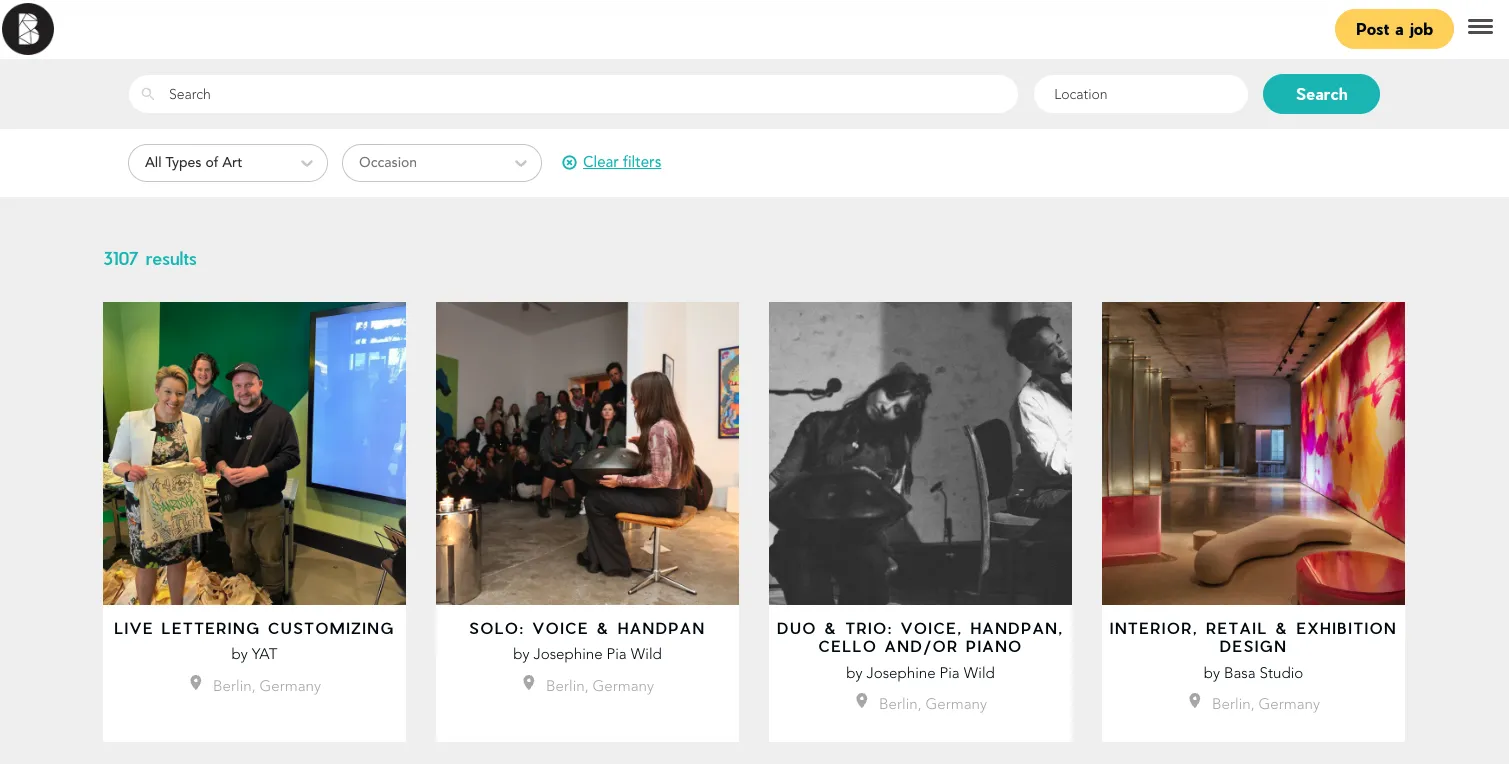
There was one overall contact form for all enquiries, which is launched via call-to-action buttons in the navigation menu and landing pages across the site. One main user pain point was the irrelevance of the questions in the contact form to their needs/queries. Another issue found users having insufficient information or details to fill up the form.
Because the generic form captured too little relevant detail, enquiries often arrived vague — creating extra follow-up before an artist could put together a quote.
Contact form entry points
All paths led to the same generic form.
The solution
IMPROVING USER FLOW
The idea of the smart contact forms would simulate a more specific flow for users and lead them into respective contact forms that are more relevant to their enquiries. Based on the analytics of the old contact form, we need to cater for 3 main types of users who need:
- Generic questions or general booking enquiries
- Help with finding artists
- To get a quotation directly from the artists
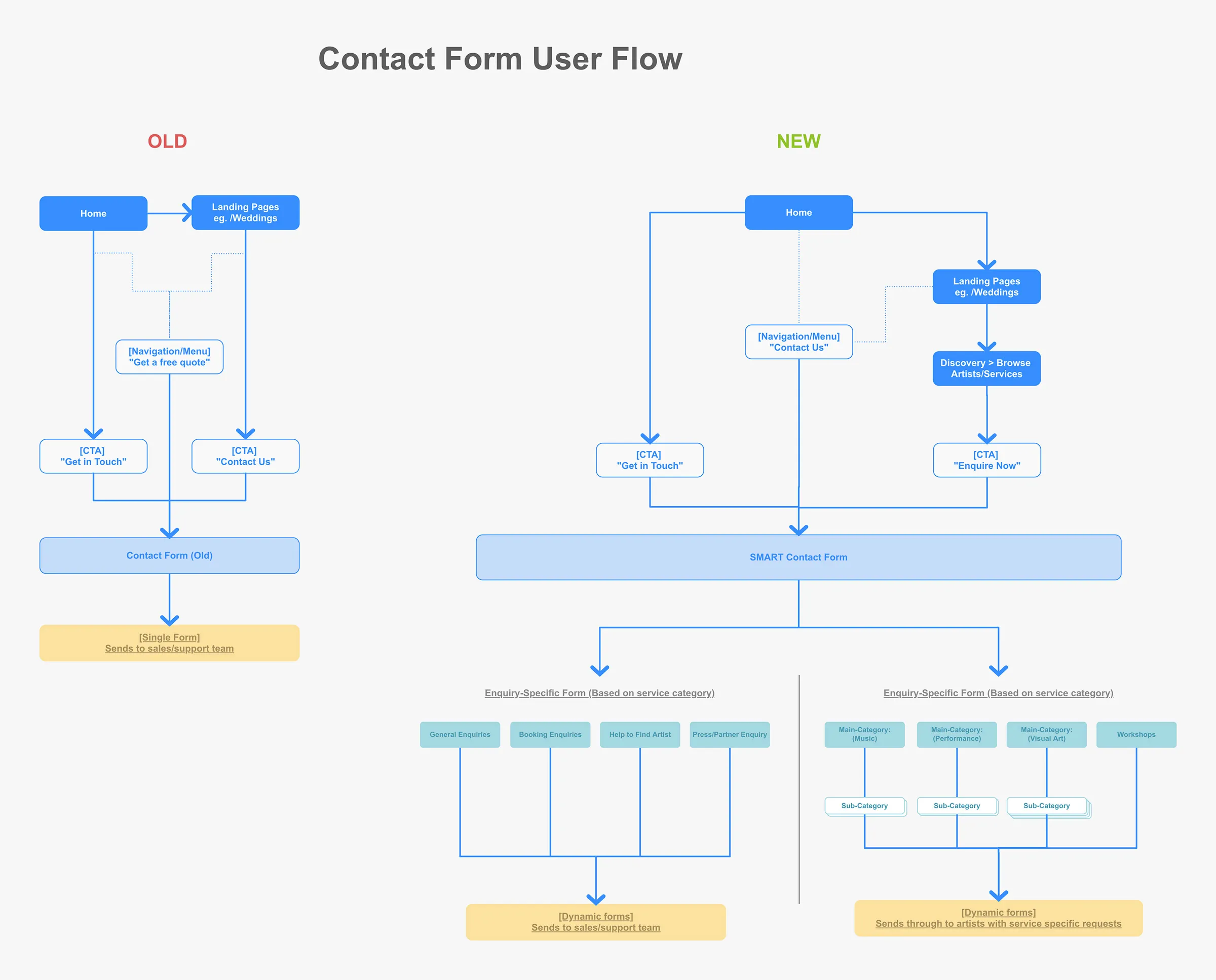
RECONSIDERING CALL-TO-ACTION:
Positioning and choice of wording for the contact form CTA plays an important role. The old CTAs leading to the generic form was too prevalent across the website, and does not encourage users to explore or discover artists on their own.
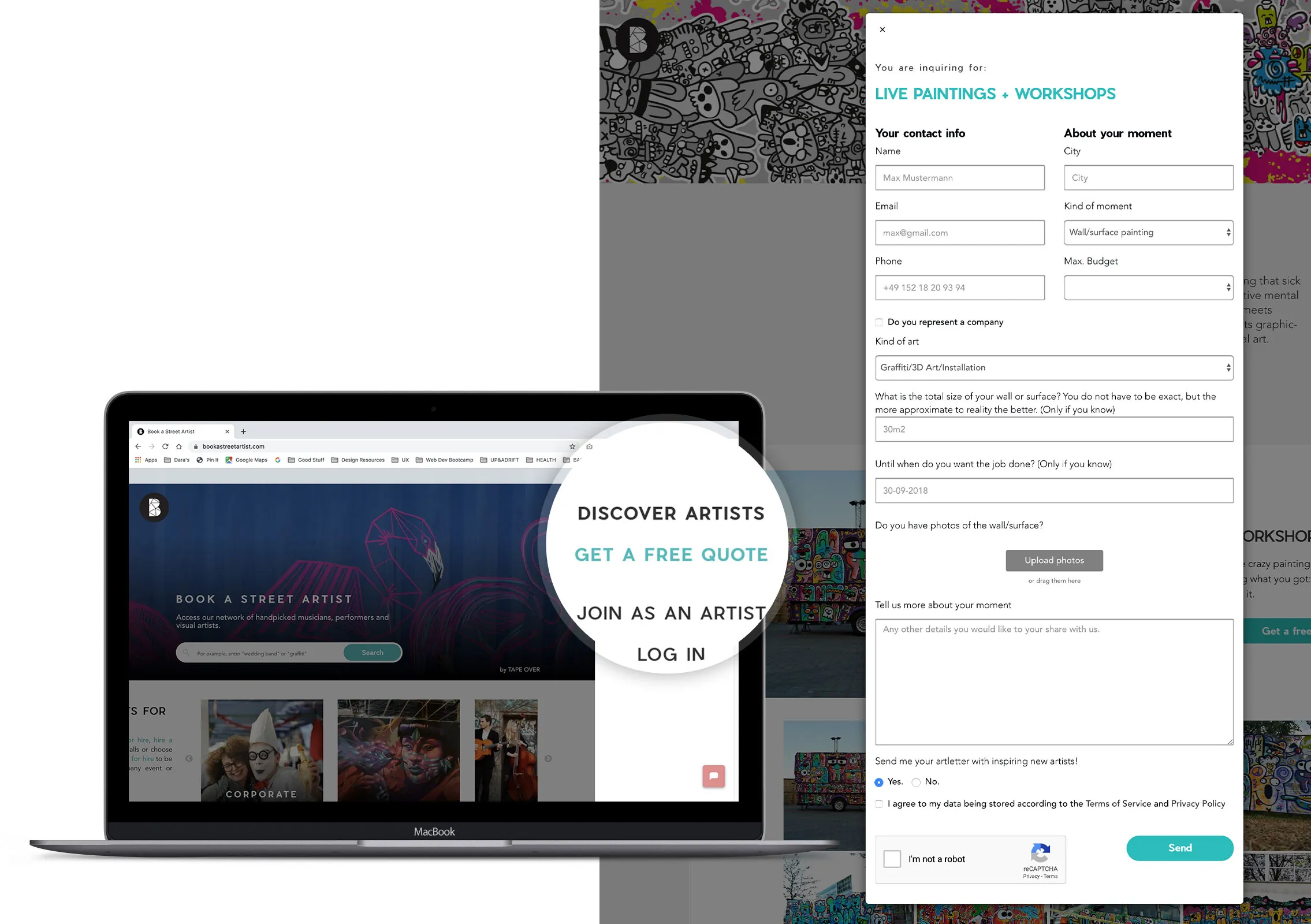
Enquiring with artists
For all quotation requests from clients to artists, based on interested services
Dynamic content
With multiple artist services available on the platform, implementing dynamic form fields would allow users to see the most relevant questions to their enquiries.
This was done by sectioning the entire form process, allocating relevant content to each service in their respective categories. Each service type was mapped question-by-question to decide which fields appear, across all artist categories.
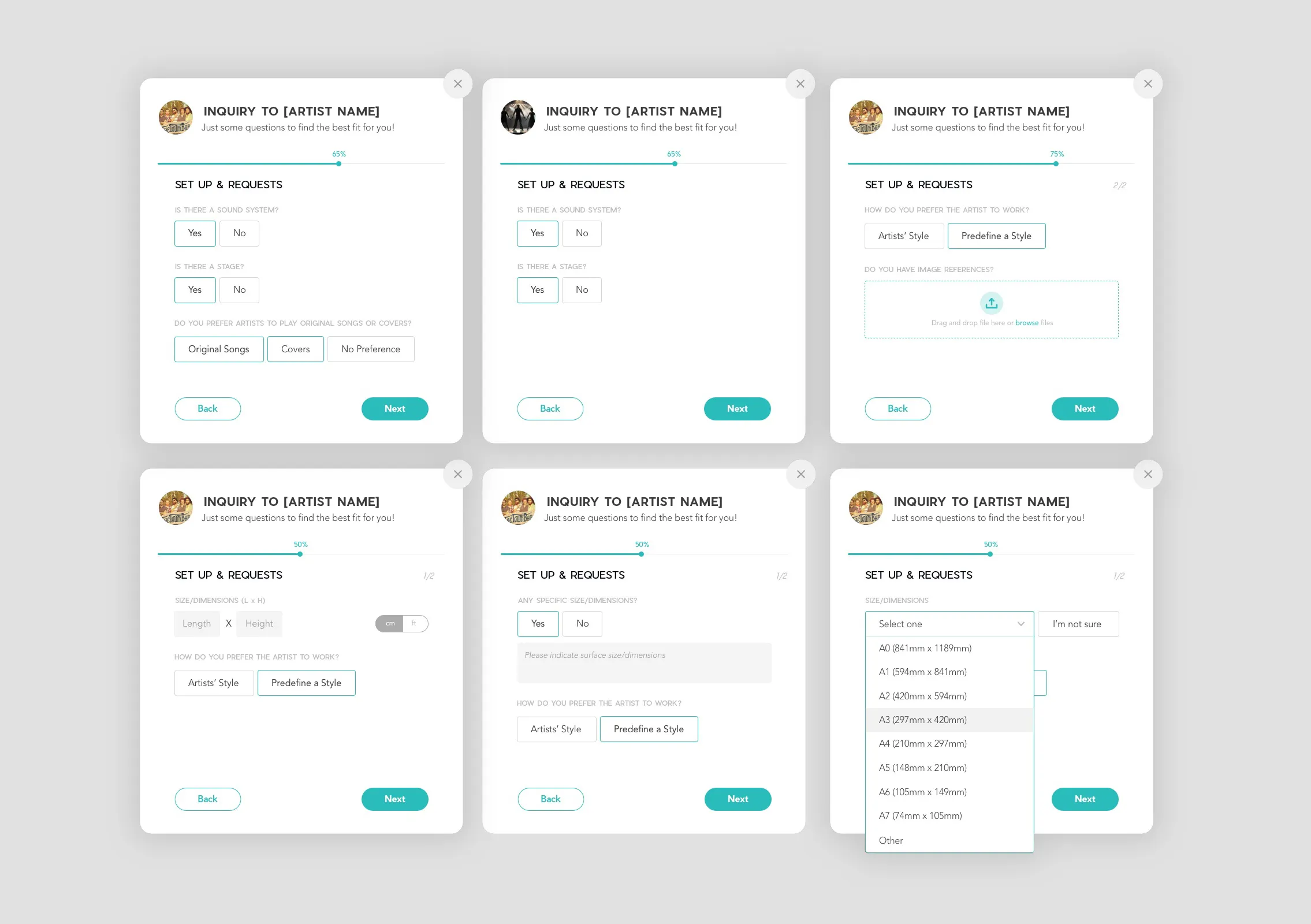
Each service type mapped question-by-question to the fields it should show.
The service taxonomy the dynamic fields were built on.
The sections were divided into:
-
- Basic Introduction
-
- Occasion Details
-
- Personal Particulars
-
- Set-up & Requests
-
- Event Specifics
-
- Additional Details
-
- Thank You/Submit
Generic Forms
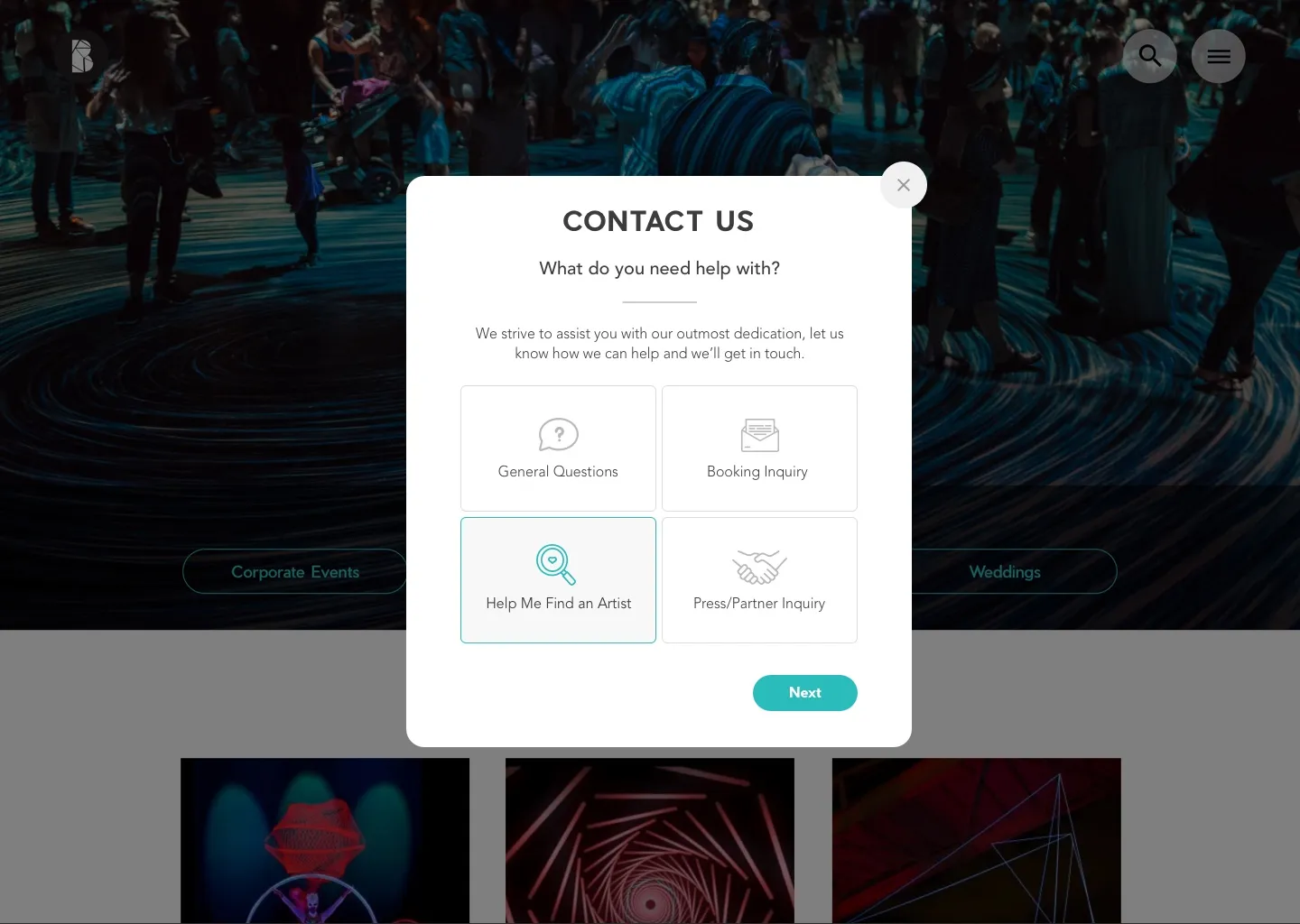
All general enquiries that are unrelated to quotation requests from artists/services
General enquiries
These forms cater towards the 24% of users who may have an enquiry that doesn't involve a particular service. The generic forms are categorised into 4 sub-forms:
-
- General Enquiry
-
- Booking Enquiry
-
- Clients who need recommendation/help finding artists
-
- Press/Partner Enquiry
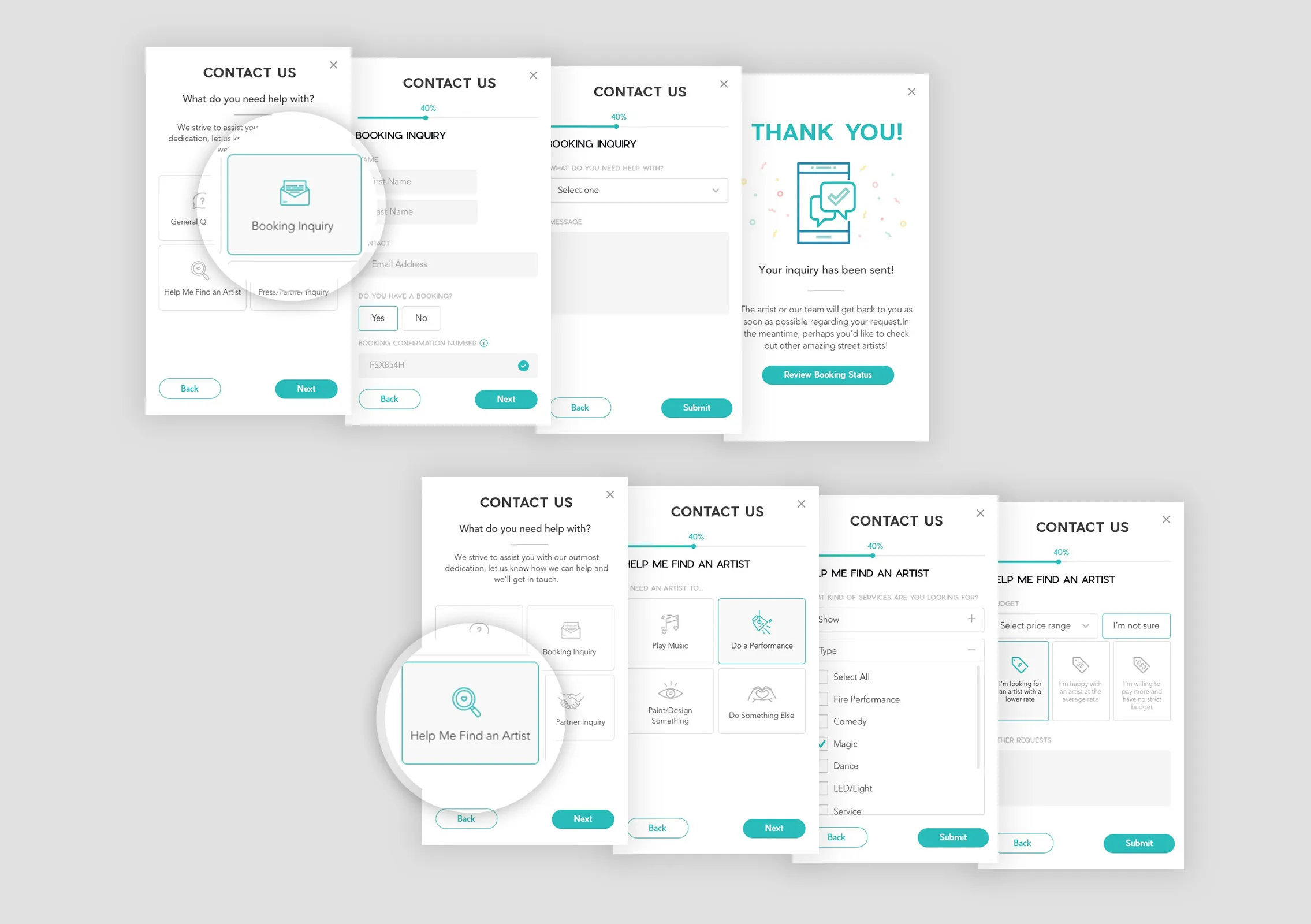
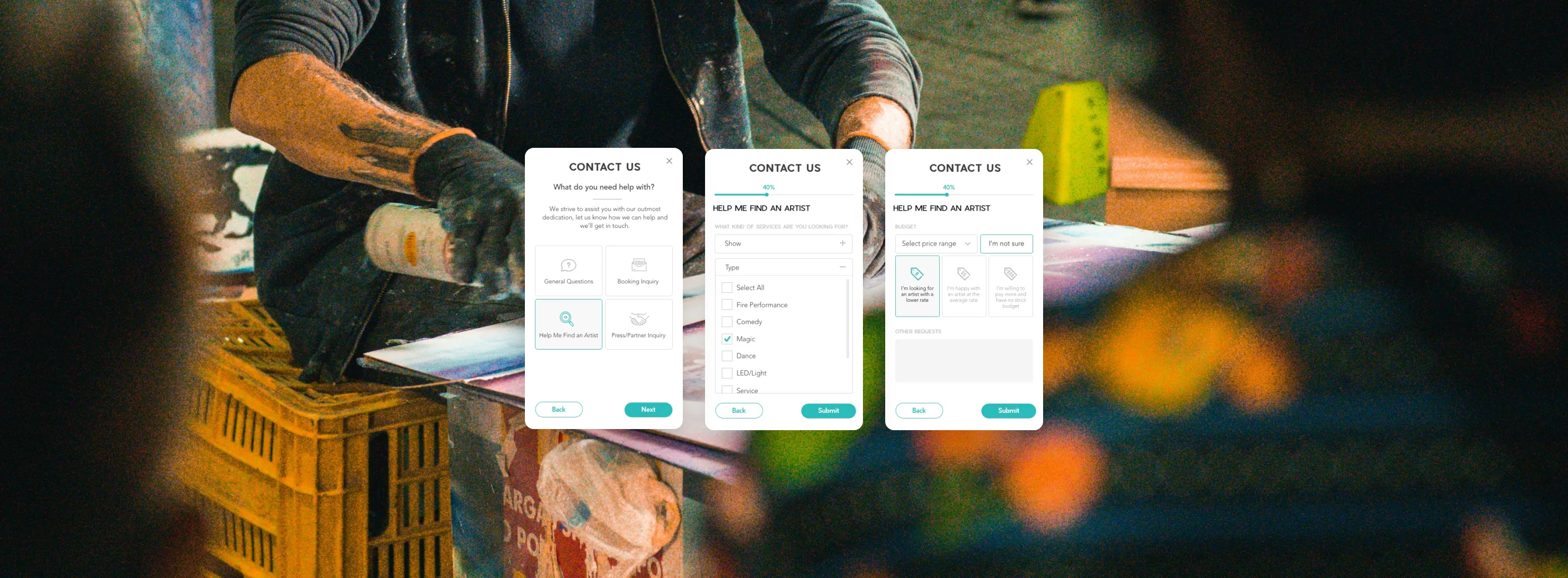
Sample Flow
Low fidelity prototype in the category: Visual Art > Commissioned Studio Work

Defining components
Maintaining consistency with component design throughout the platform
From working with the team through launch, the redesign led to:
- Reduced drop-off rates of the contact form
- Increased efficiency for CS team
- Specific enquiries addressed by the relevant teams
- Quicker turnaround responding to enquiries, with less back-and-forth