User Personas
Development of research-driven user personas for OCBC's consumer banking
Building the Persona Diamond
Turning banking research into a segmentation model my team could act on.
Why personas
Personas help drive decisions — helping stakeholders:
- Understand customers' banking patterns and the behaviour behind them
- Prioritise which customer groups to target, and how — supporting business growth in product and marketing
- Decide with confidence, knowing which insights apply to which group
- Design better, by surfacing real usability pain points tied to real needs
At the core: build empathy, so the team could design products that actually meet customers where they are.
Process overview

The starting point
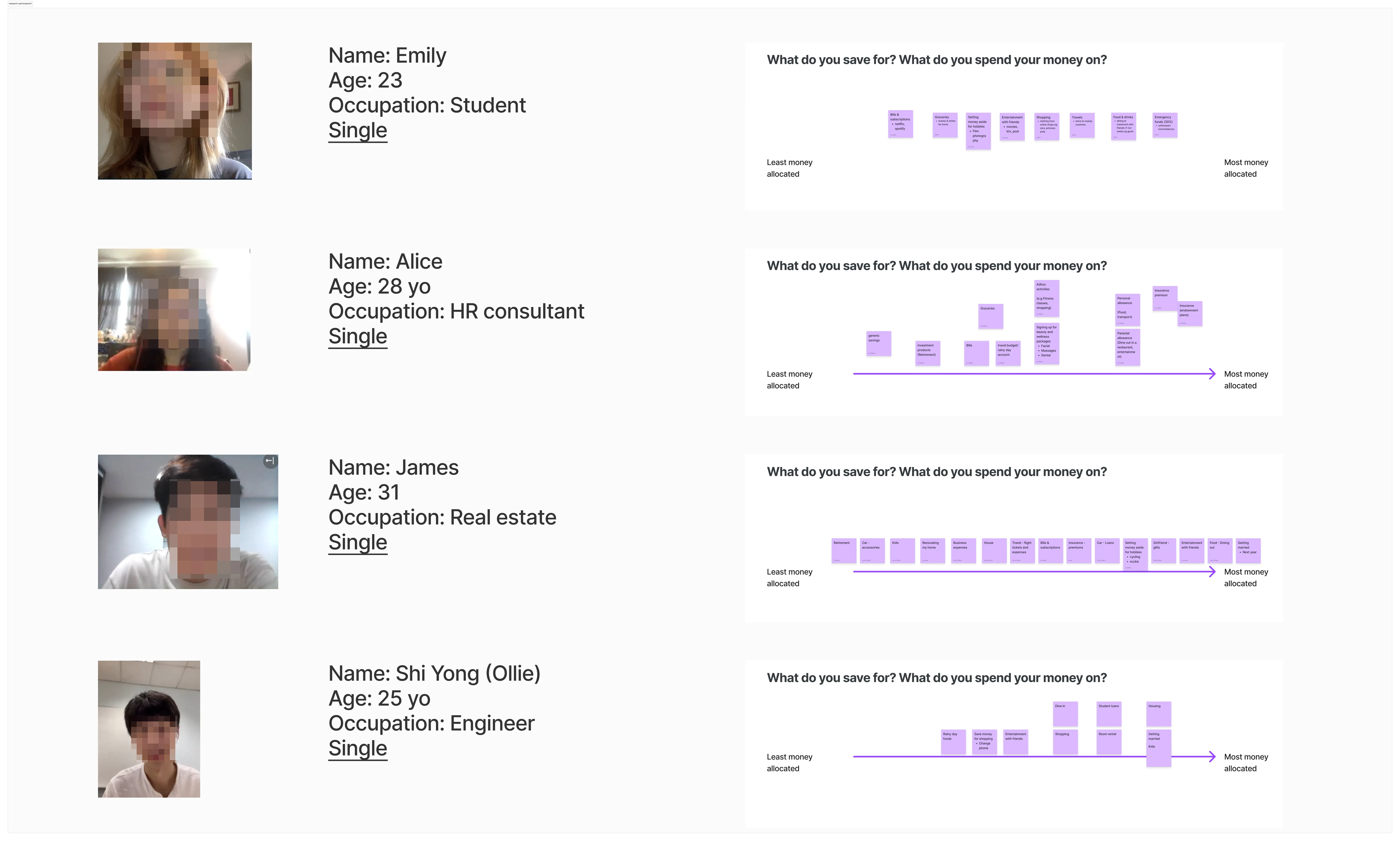
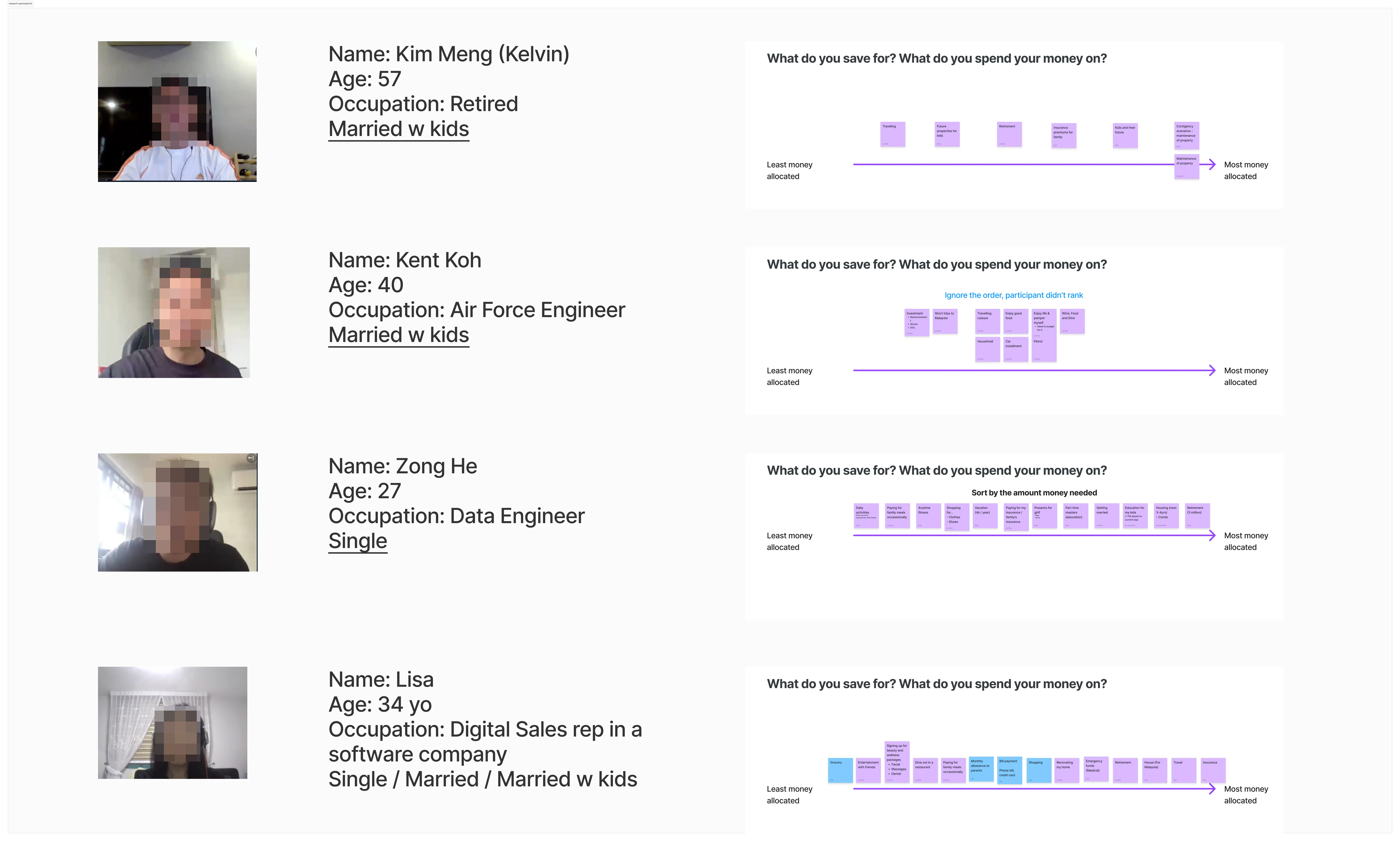
Our research team have been running interviews and gathered behavioural data across consumer banking customers, however these were never studied holistically to understand the types of user personas that the bank has. The findings were often fragmented and catered to a feature or project basis. Taking lead on this in small squad, our role was synthesis, taking that raw research and shaping it into personas the business could actually design and build around.
Finding patterns
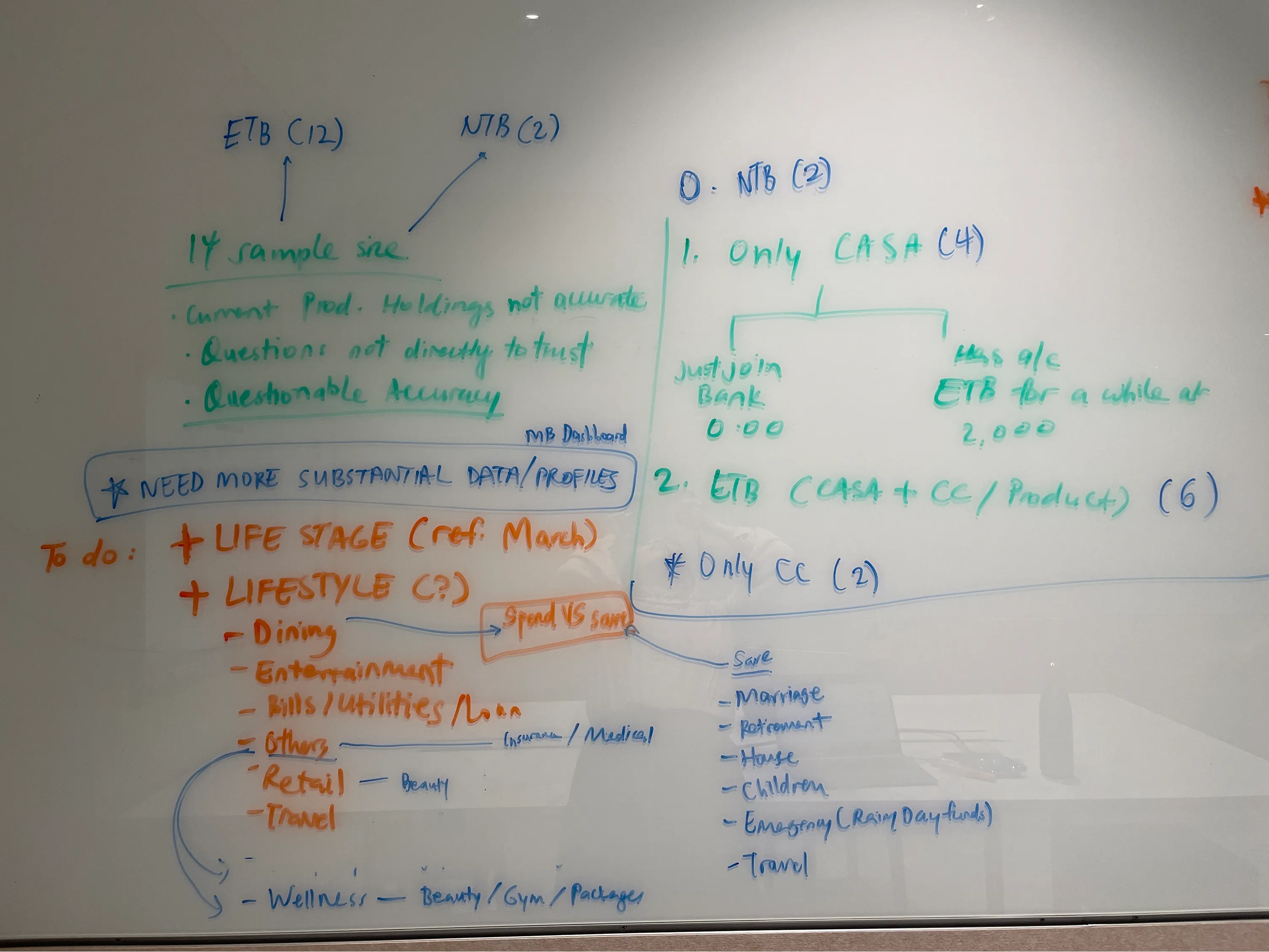
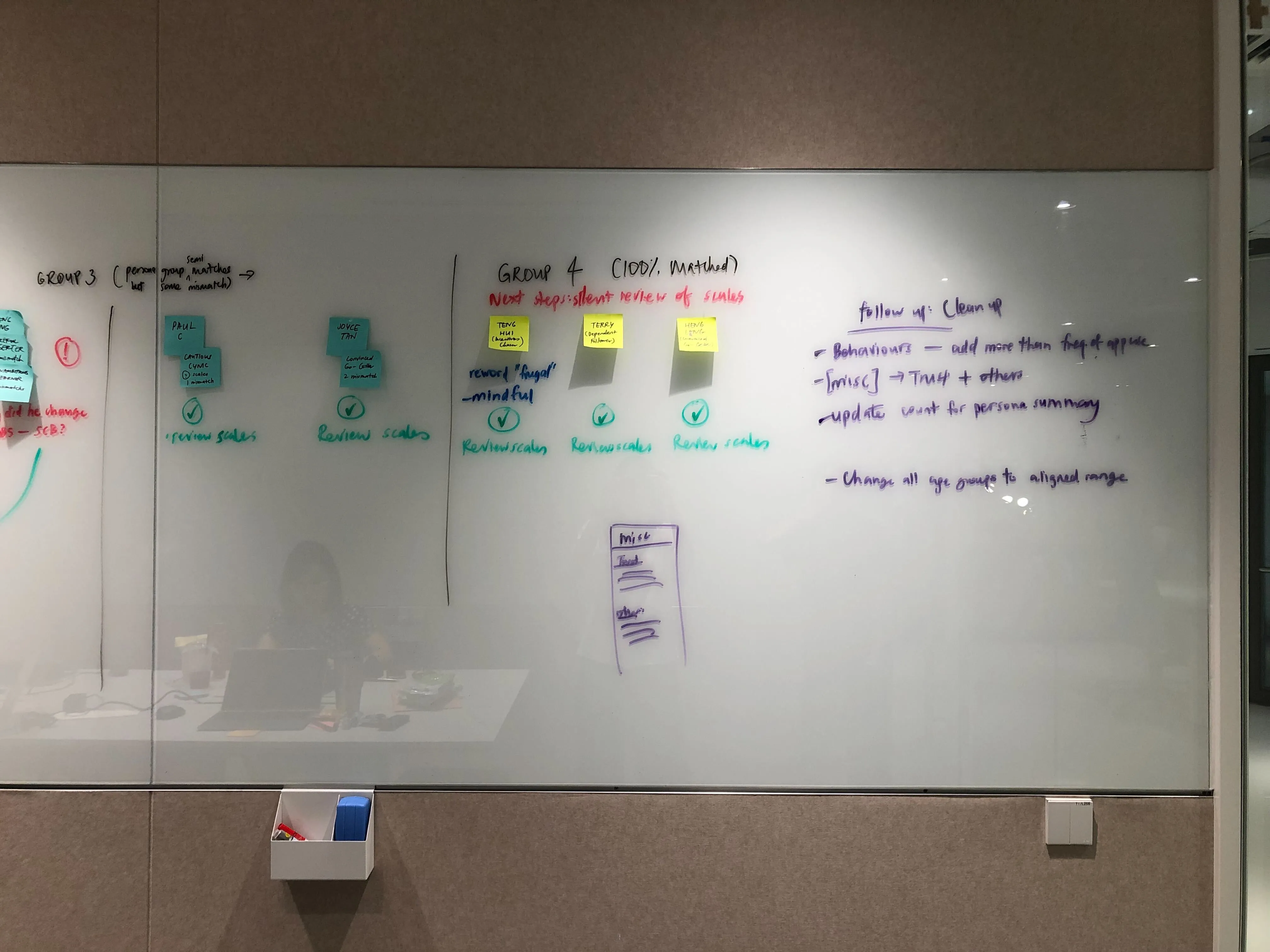
We ran a series of internal workshops that focused on customer pattern analysis, testing three questions:
- What pattern of products commonly appear together within each emerging persona?
- Where are the product opportunities — needs customers have but aren't yet served?
- Does life stage actually predict banking behaviour, or is something else driving it?
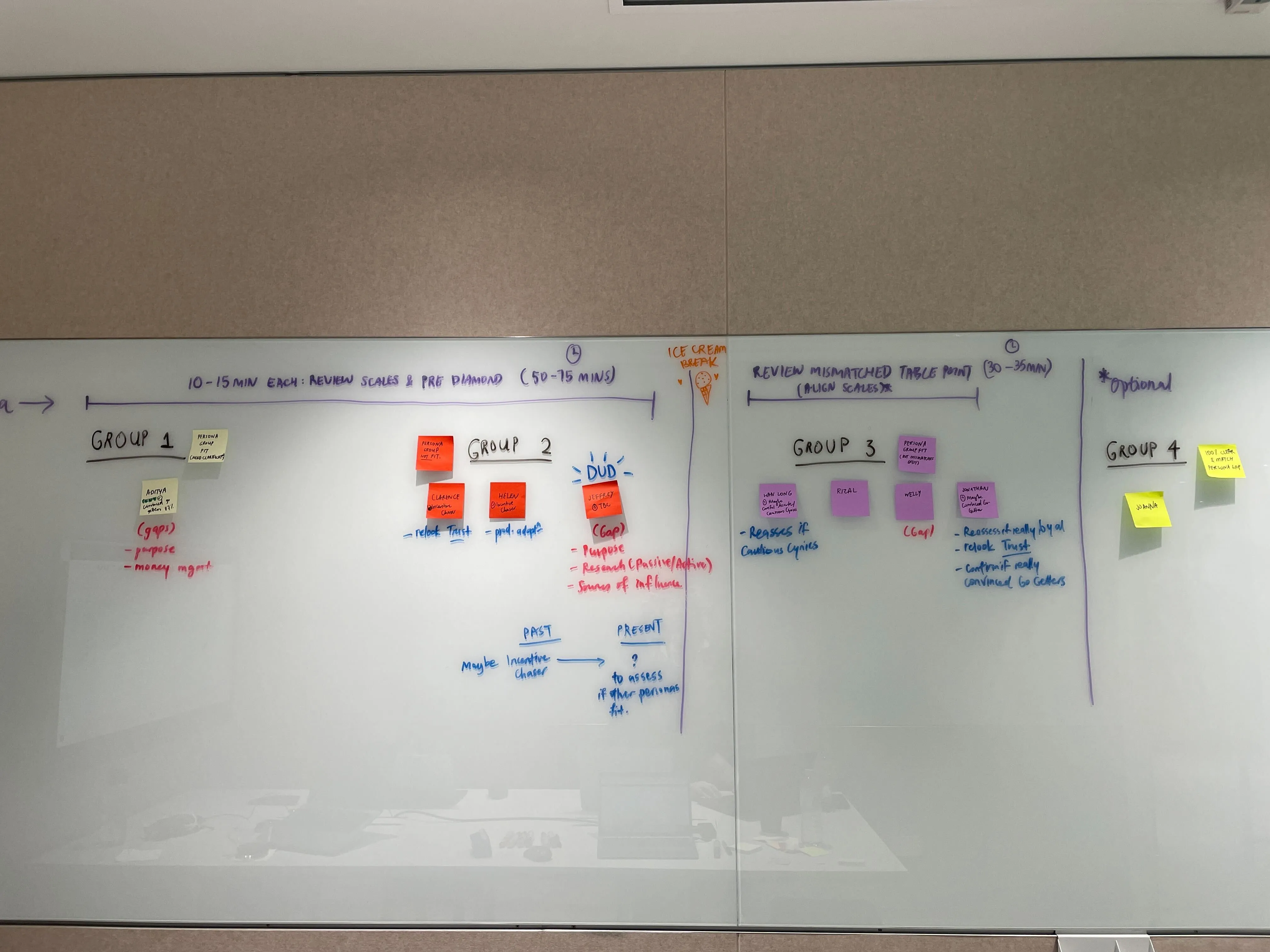
These took a few rounds of hypothesis and re-works to better match the data points we have.
Defining what to measure
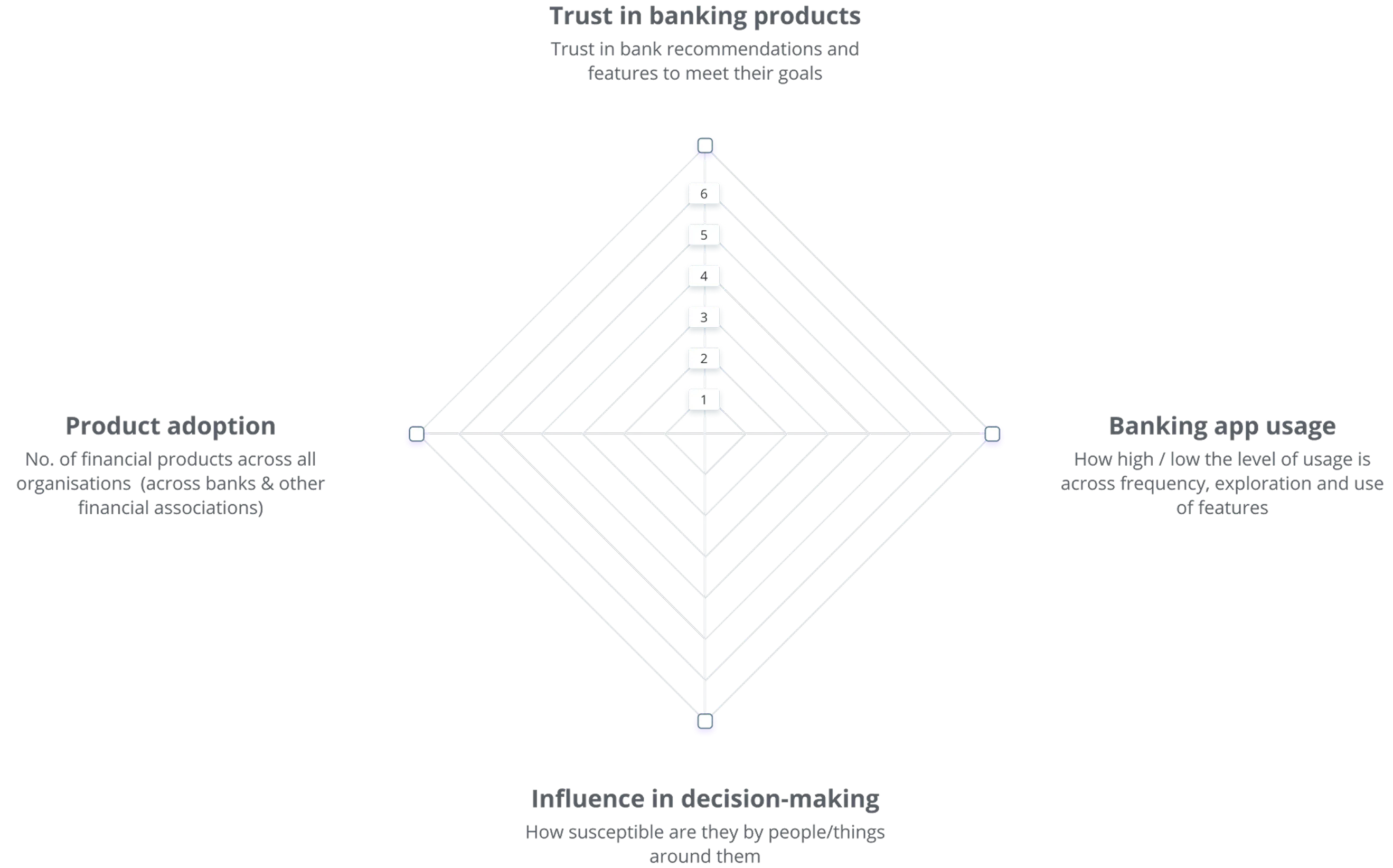
From the interviews, we defined four key scales to plot every participant against:
What it tells us
Engagement depth
What it tells us
Confidence in the bank's judgement
What it tells us
Current relationship breadth
What it tells us
Autonomy vs. reliance on advice
Supporting context: Financial behaviours, Motivations, Readiness, Attitudes, Lifestyle helped explain why each participant landed where they did.
The challenge we faced during internal sharing:
“How do you measure trust?”, someone asked.
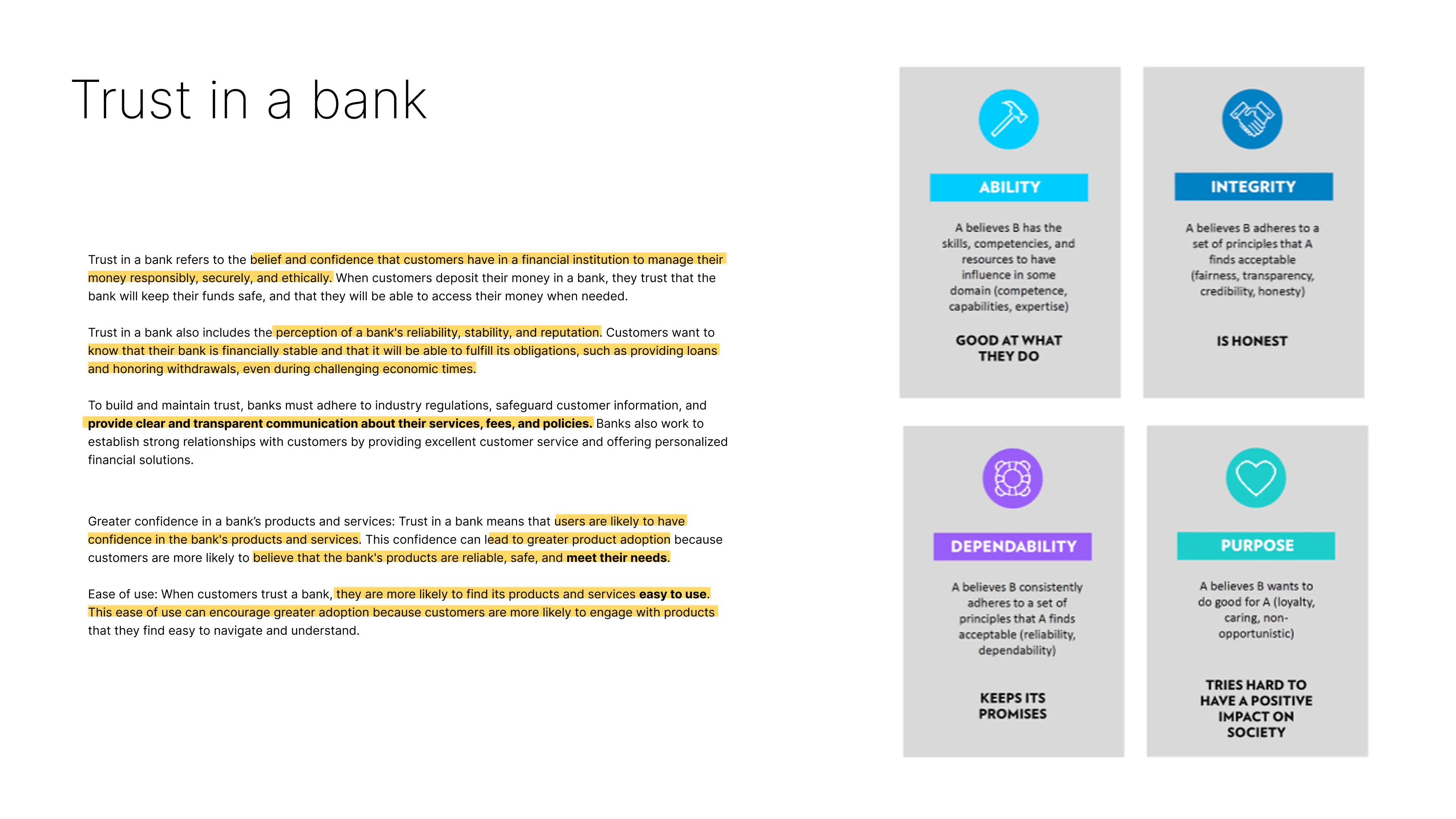
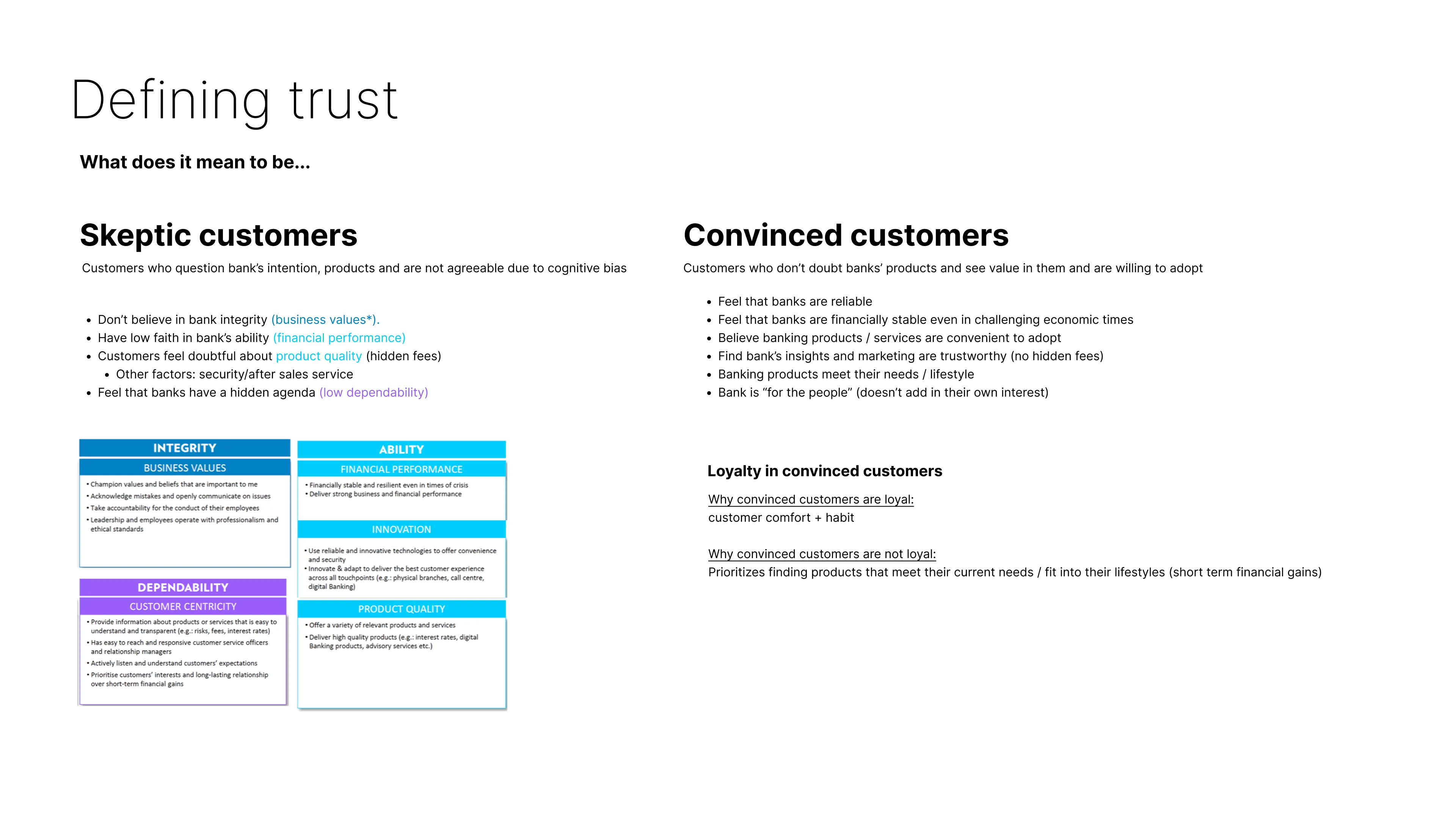
It felt too broad. So we dig deeper, specifically into defining trust in a bank and what makes it measurable. These came in categories of “Ability”, “Integrity”, “Dependability” and “Purpose” Later we identified these as Skeptic customers VS convinced customers (which branches into loyal and not-loyal convinced customers)
Core insights
Cross-referencing the measures surfaced one relationship that shaped everything downstream:
Higher app usage → better personalisation → increased trust → product adoption
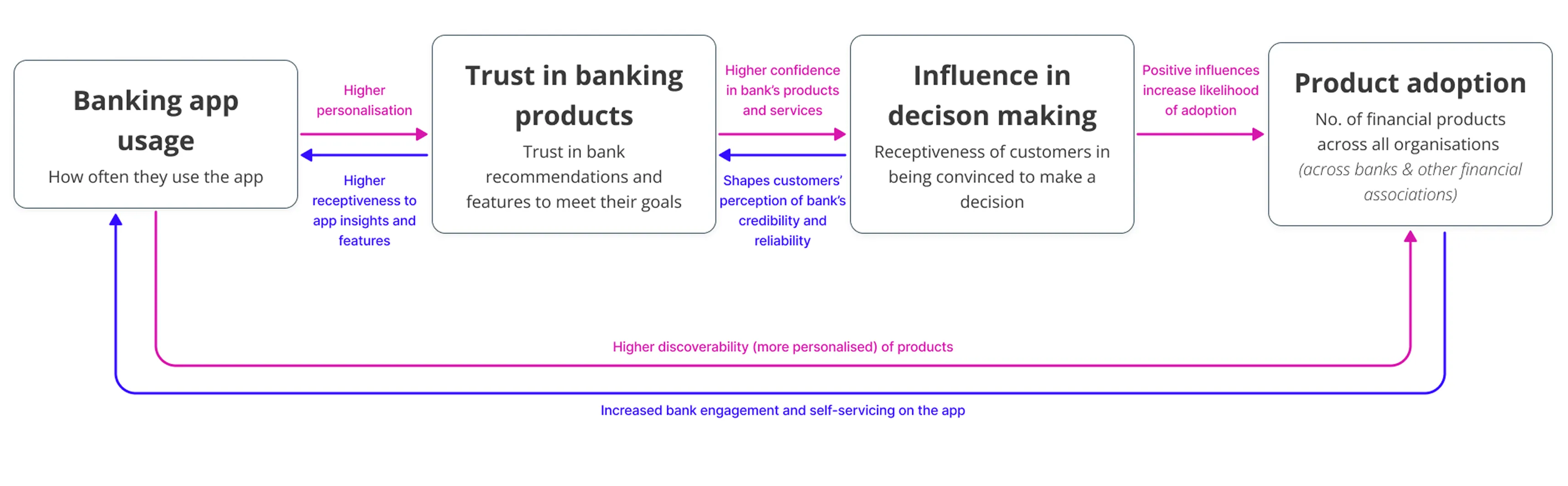
More frequent app use means more chances to discover products, and richer behavioural data to personalise recommendations. Better personalisation builds trust — and trust is what ultimately drives adoption. This is why app usage and trust became our two primary axes.
The Diamond chart
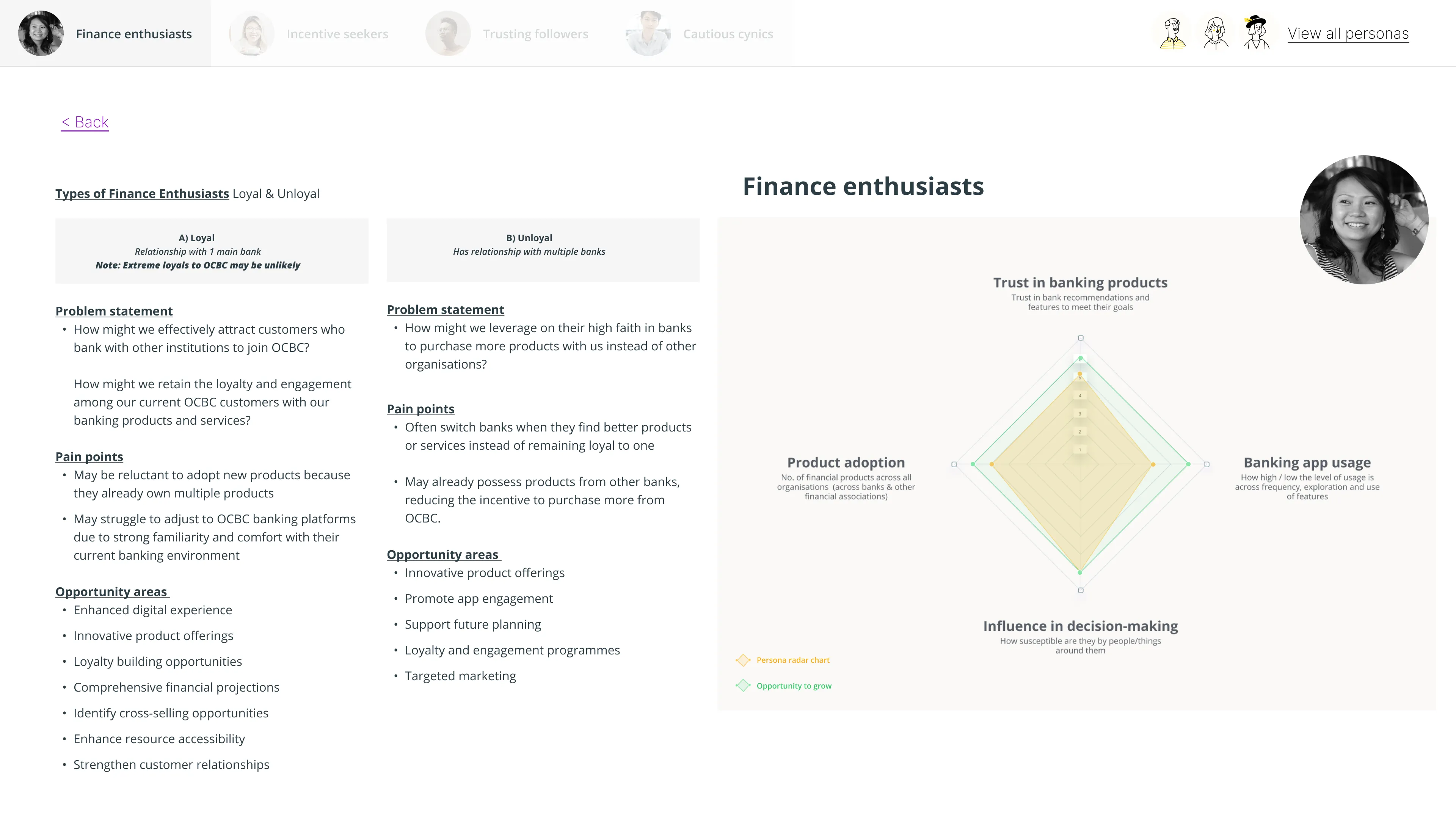
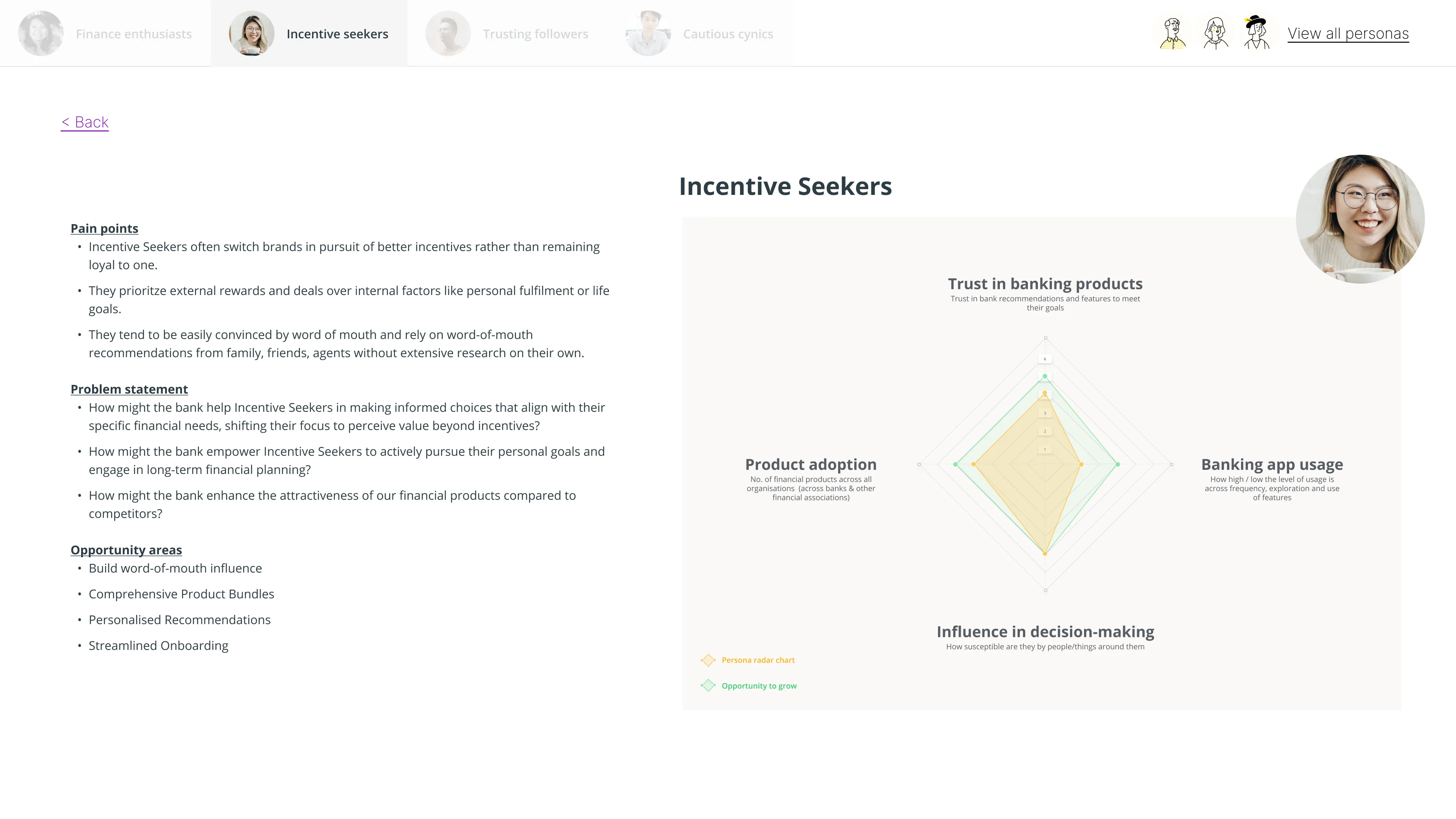
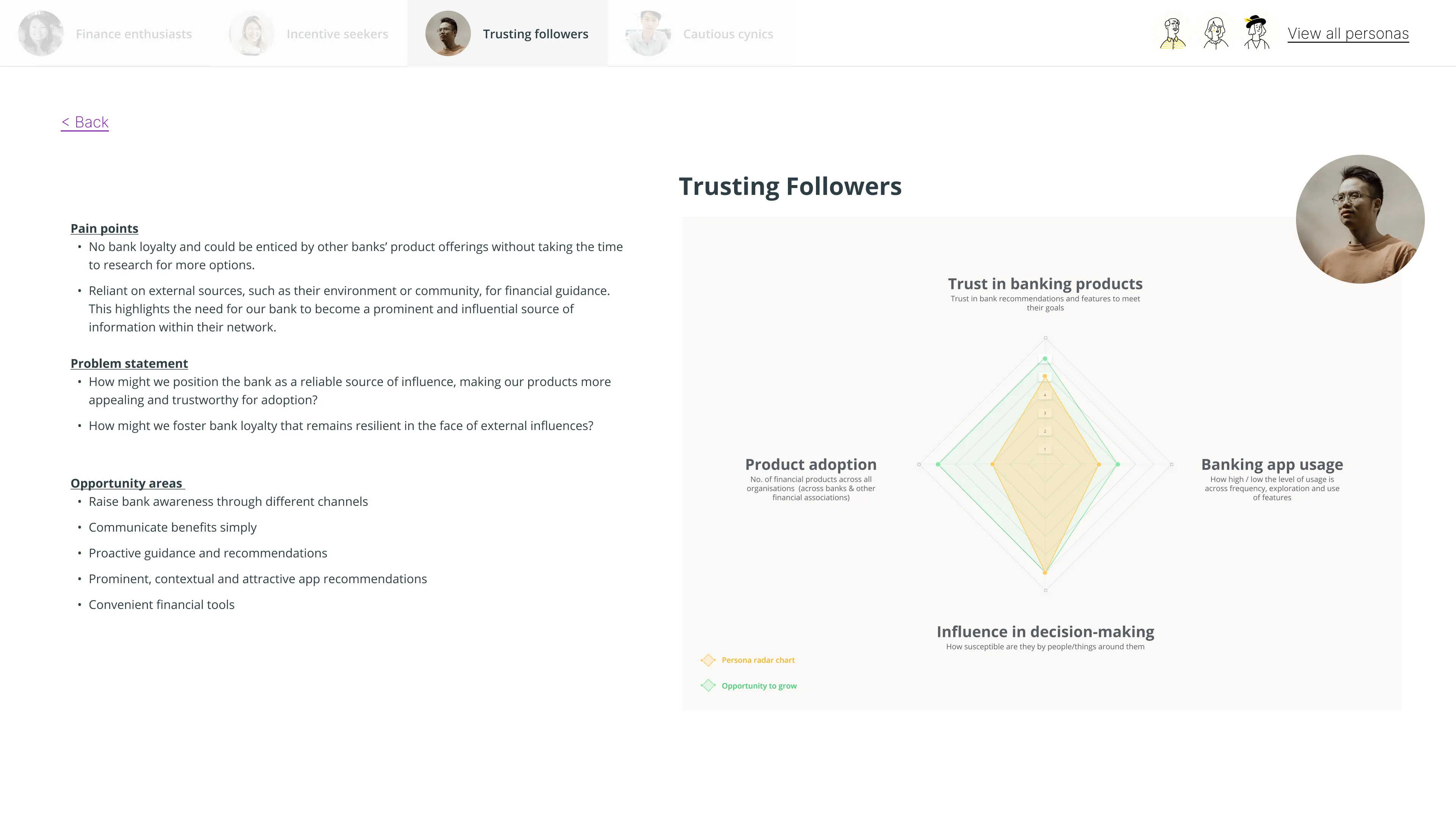
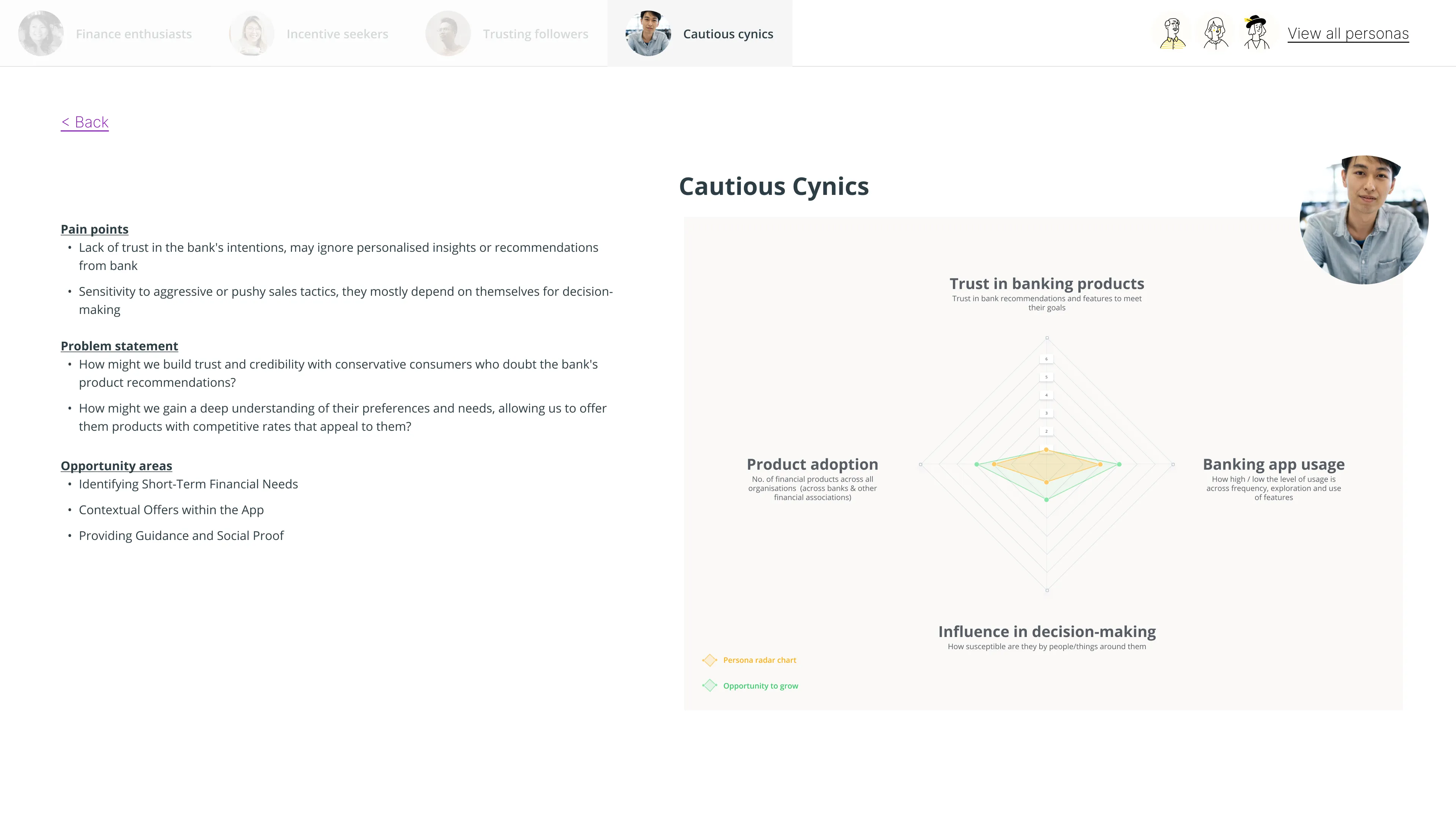
Plotting app usage against trust — with product holdings and influence as secondary signals produced distinct personas & patterns, each representing a measurable share of the customer base.
Measuring scale
For each of the four key measures, we built a 1–6 scale, turning qualitative interview signals into something we could consistently plot on the diamond.
Synthesising customer profiles
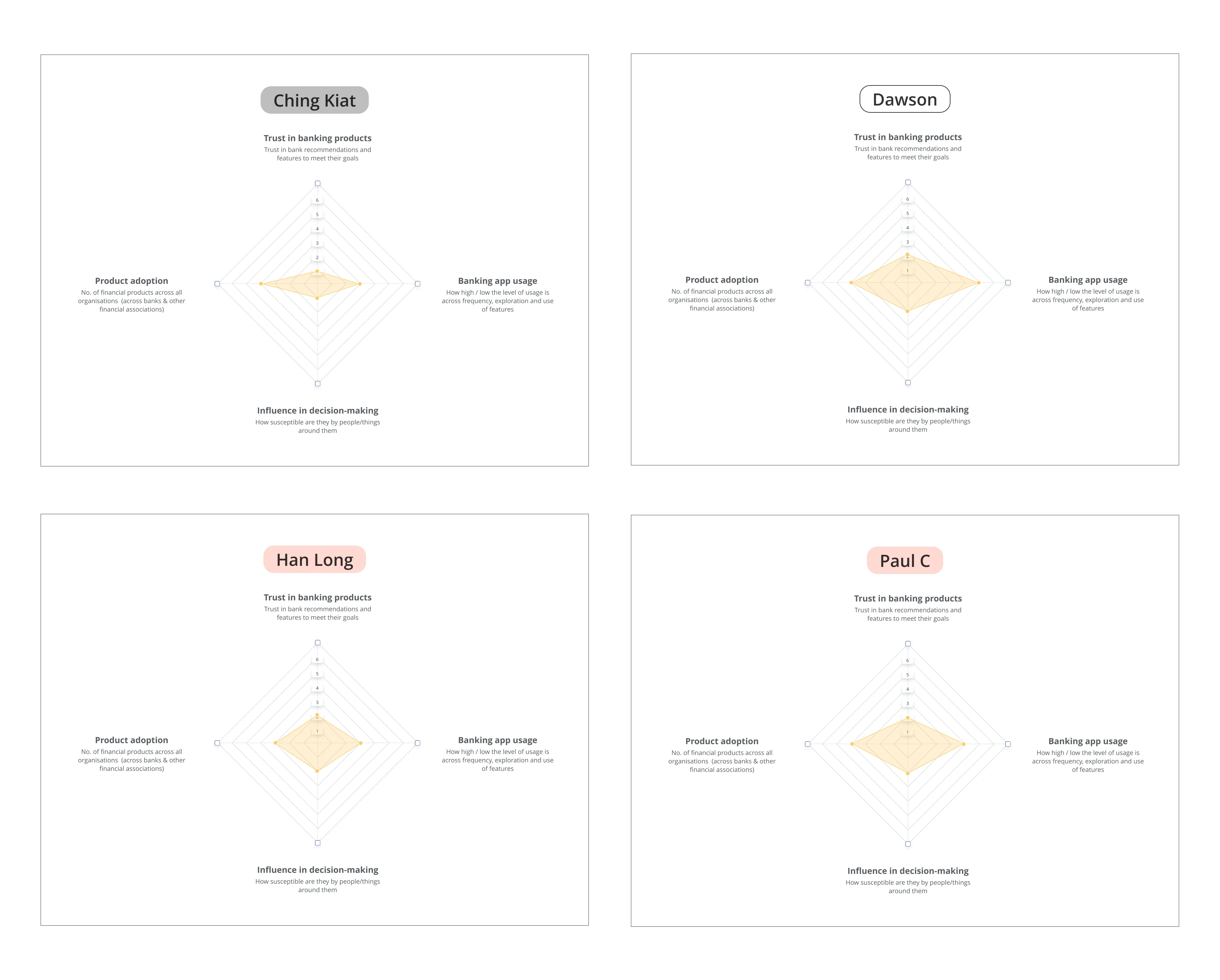
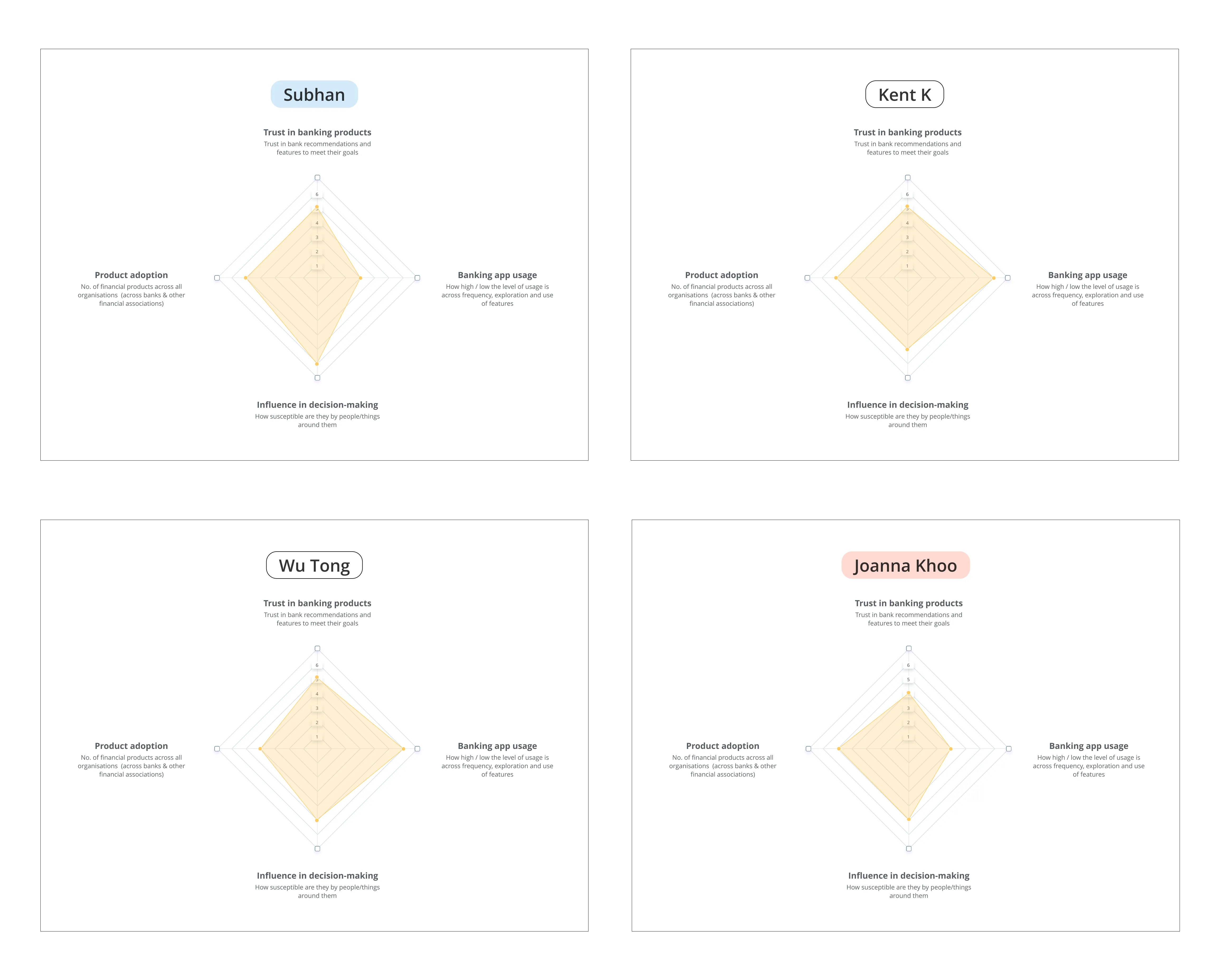
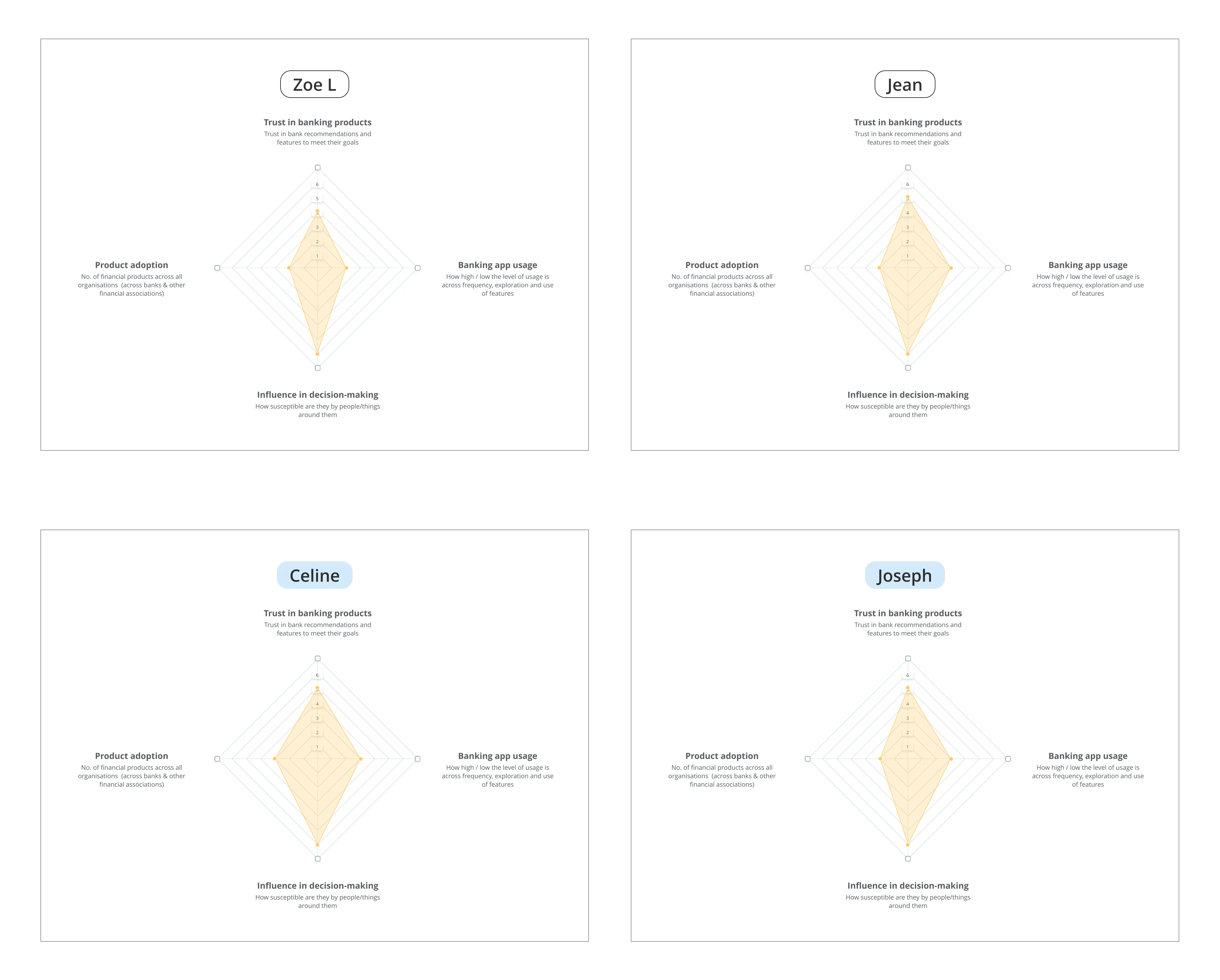
With scales in place, our squad of 4 divided and conquered, each deep-diving into a subset of the 44 synthesised profiles to plot behaviours, patterns, motivations, readiness, and commitment into a shared table. Every profile was then reviewed collectively as a group. Disagreements were surfaced and re-discussed until we reached consensus — a deliberate check to keep any single person's bias from skewing where a customer landed on the diamond.
Where the personas emerged
Once all the synthesised profiles were plotted, a clear pattern surfaced: four personas accounted for the majority of repeated behaviours across the sample. Outliers and less-common patterns were set aside — not discarded, but deprioritised for future exploration.
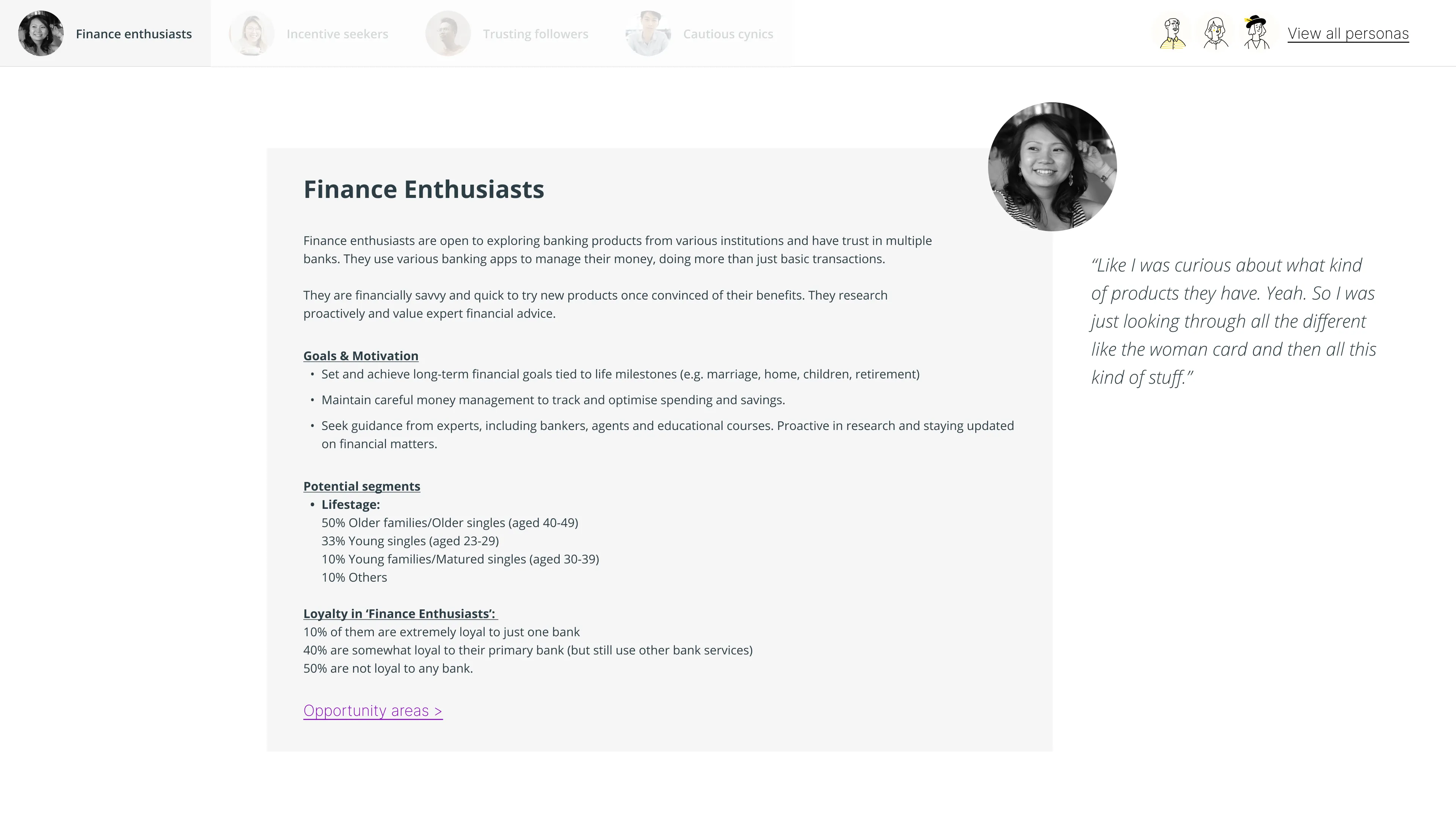
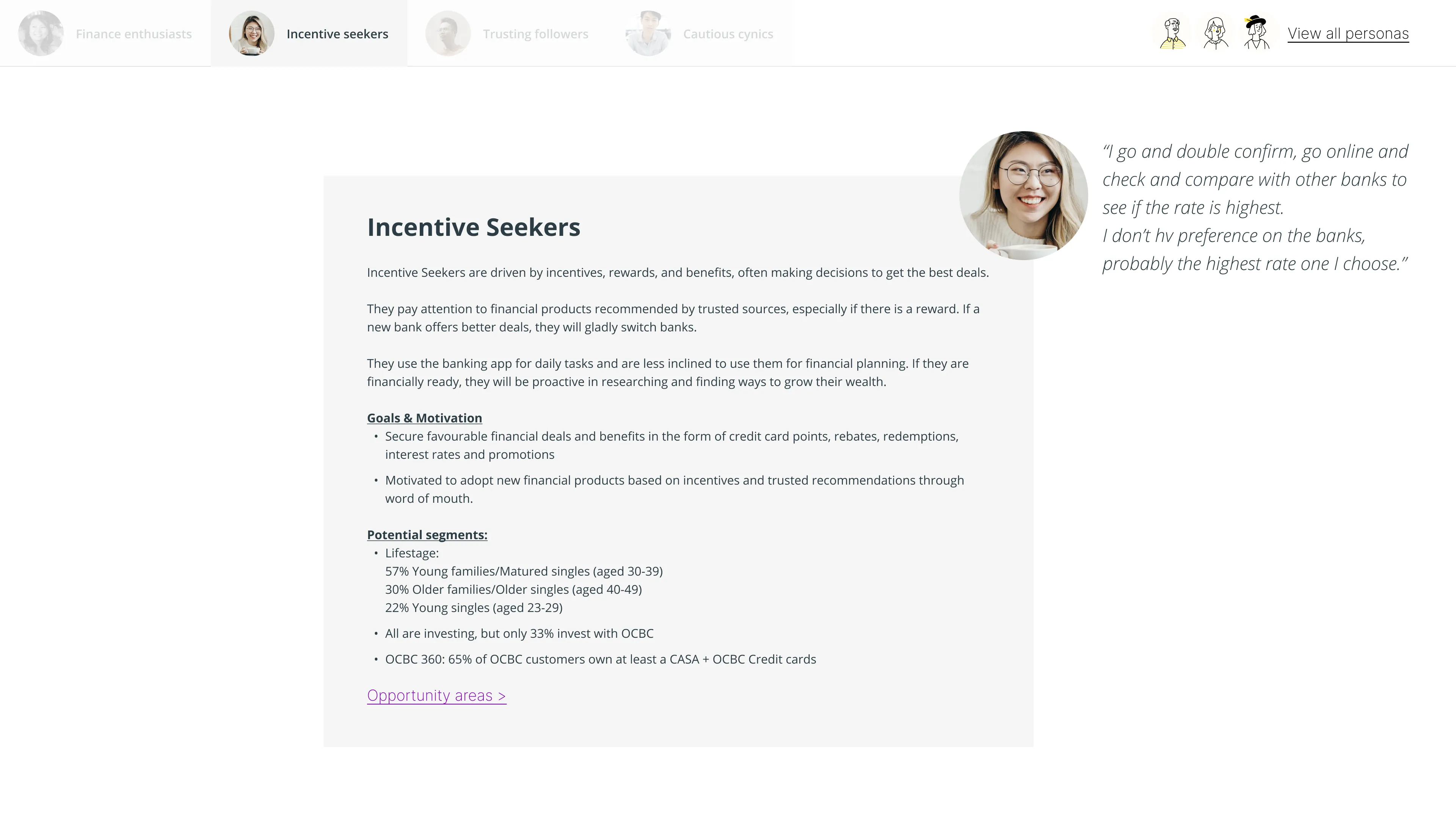
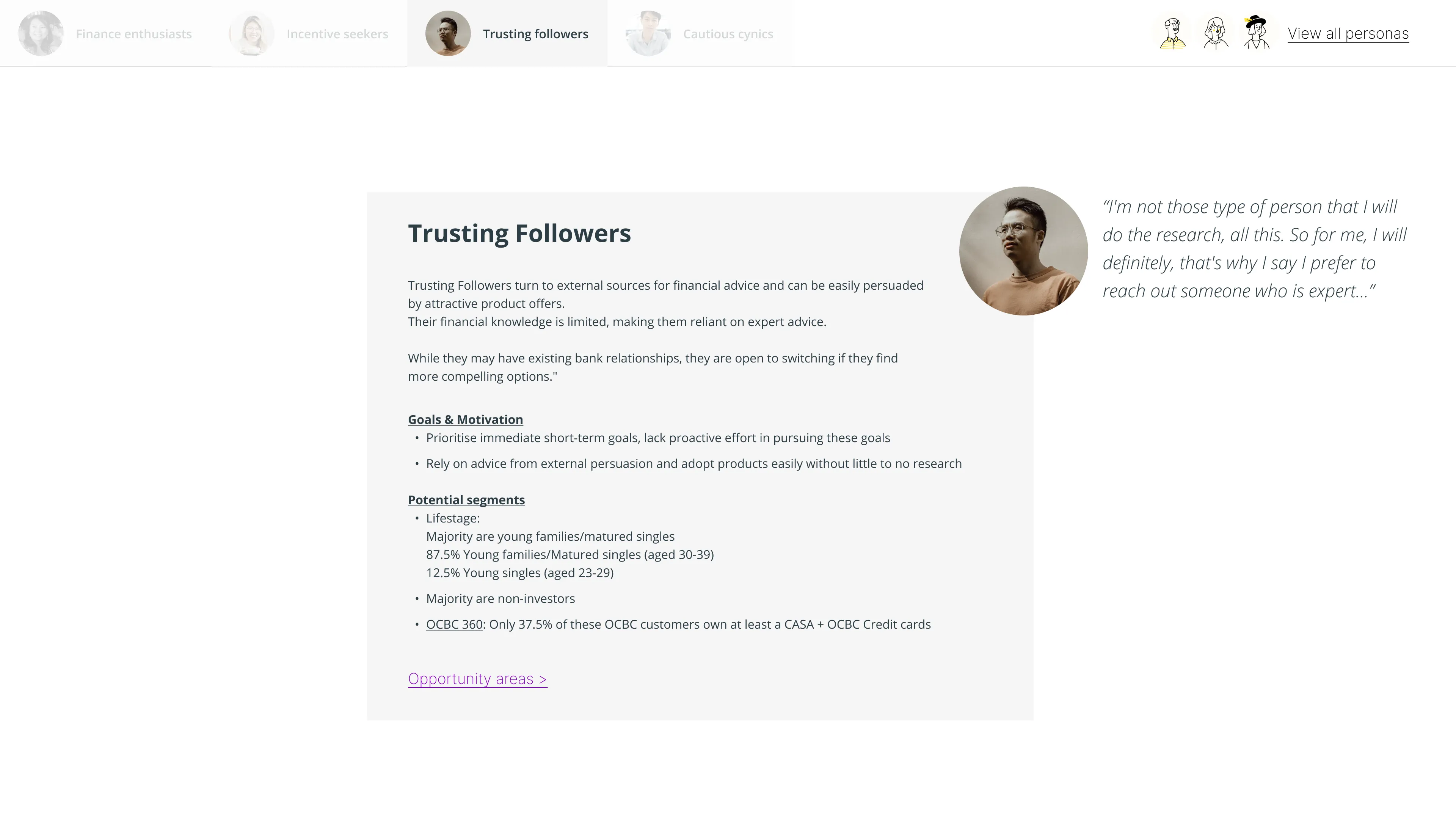
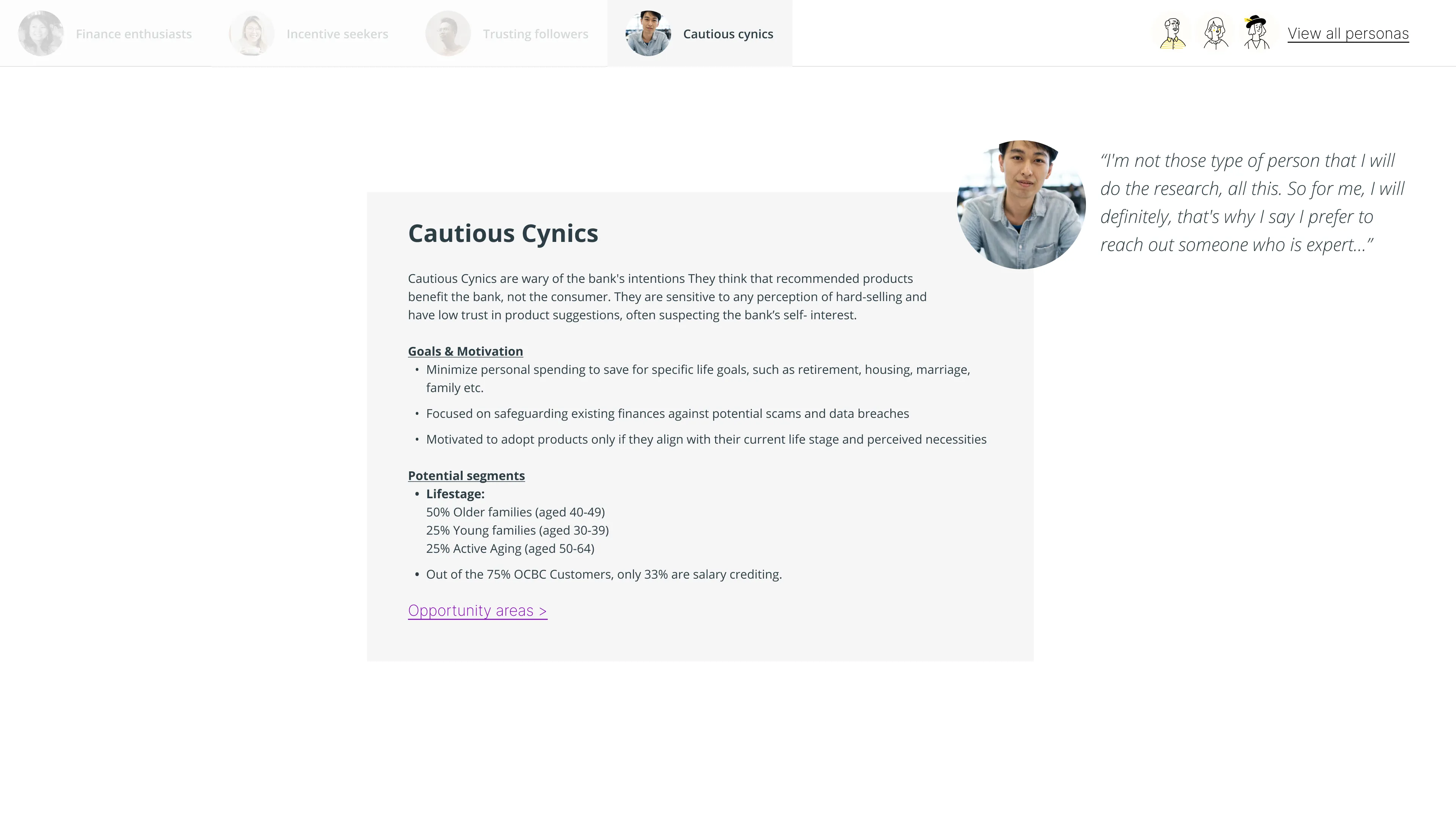
User personas defined
For each persona, we mapped a clear growth pathway — specific product or engagement moves the business could make to shift them towards higher trust and adoption.